
 VIKAMA Nordic style green leaf bathroom floor mat, bathroom quick drying anti slip mat, bathroom door absorbent foot mat
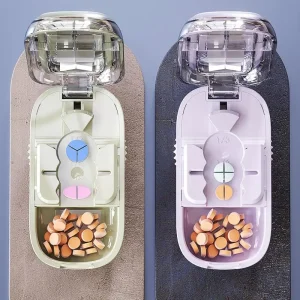 3-in-1 Pill Splitter – Cut Tablets Into Halves, Thirds or Quarters with Precision
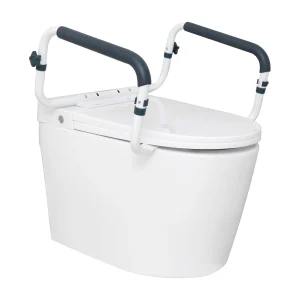 SucceBuy Toilet Safety Rail 300LBS Capacity Seat Adjustable Width Fit Most Toilets Toilet Handles Grab Bars for Disabled Seniors
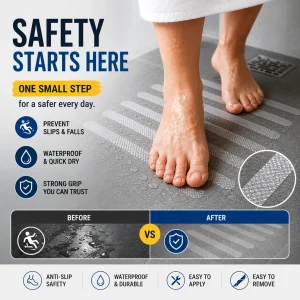 Anti-Slip Safety Strips for Shower, Bathtub & Stairs
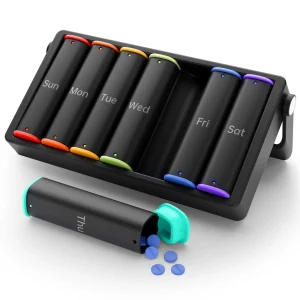 Large 7-Day Pill Organizer – Weekly Pill Box with Oversized Compartments
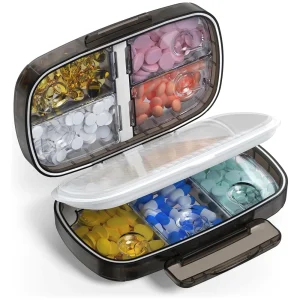 Waterproof Travel Pill Organizer – 8-Compartment Locking Pill Case for Seniors
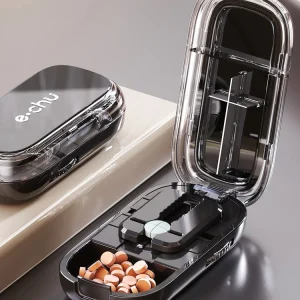 Adjustable Pill Cutter for Multiple Pills – Splits Up to 6 Tablets at Once
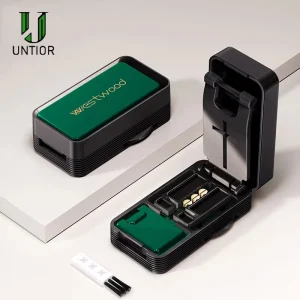 Pill Cutter with Sealed Storage – 2-in-1 Tablet Splitter and Pill Organizer
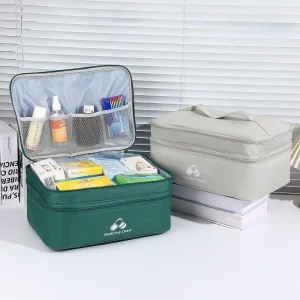 Double Layer Medicine Storage Bag – 3 Sizes, 4 Colors, Oxford Cloth
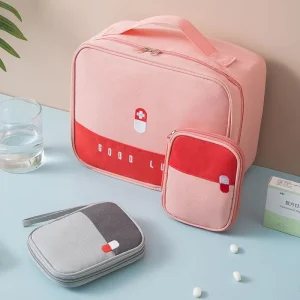 Portable First Aid Kit Bag – Waterproof Home, Car & Outdoor Medical Organizer
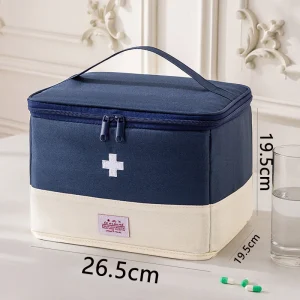 Foldable Medicine Organizer Bag – Lightweight Oxford Cloth, 6 Colors
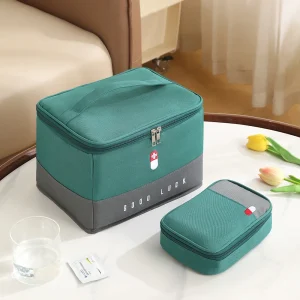 Waterproof Medicine Storage Bag – Large Capacity Home & Travel First Aid Organizer
Evidence-based content. Last updated: May 2026. Sources: AARP Travel Research, CDC, Transportation Security Administration (TSA), National Institute on Aging.
Travel after 65 doesn’t have to be complicated — but it does require more preparation than it did at 40. The difference isn’t physical limitation. It’s the number of things that now need to come with you.
Medications. Medical devices. Chargers for those devices. Emergency contact information. Insurance cards. A blood pressure cuff for a week away. A CPAP machine. A hearing aid charging case and spare batteries.
According to AARP’s 2024 Travel Research, adults over 65 are the fastest-growing segment of international travelers — and the most likely to experience a preventable health issue during travel due to missed medications or forgotten medical equipment.
This guide covers everything: what to pack, how to organize it, what TSA allows, and the systems that turn a stressful trip into a confident one.
The Biggest Risks for Senior Travelers
Most travel health problems for seniors are preventable. They fall into three categories:
- Missed medications — disrupted routines, different time zones, and forgotten pill organizers account for the majority of medication-related travel emergencies
- Dead or lost medical devices — hearing aids without charged batteries, medical alert pendants without power, CPAP machines without adapters
- No access to emergency information — allergies, current medications, and emergency contacts not accessible when they’re needed most
None of these require a medical event to cause serious disruption. A dead hearing aid battery on a long flight means missing gate announcements. A forgotten blood pressure medication for three days is a genuine medical risk. A lost charger for a medical alert device means traveling without the safety net it provides.
Good packing organization eliminates all three risks before they happen.
Medications: The Non-Negotiable Packing Rules
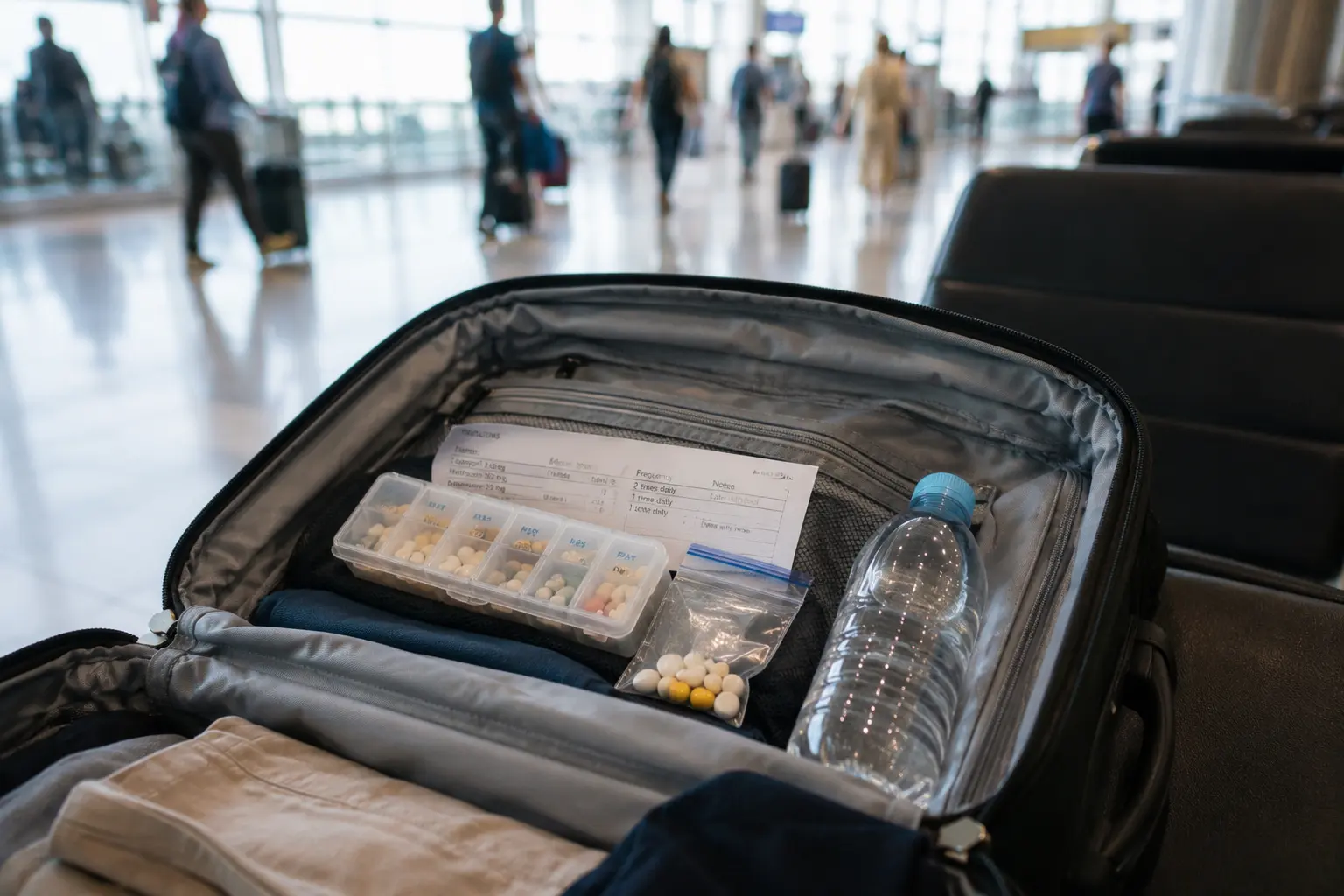
1. Always Pack Medications in Carry-On Luggage
Checked luggage gets delayed, lost, and exposed to extreme temperatures in cargo holds. All medications — prescription and over-the-counter — belong in carry-on baggage. TSA explicitly allows medically necessary liquids, gels, and pills in carry-on bags without the standard 3.4 oz restriction.
2. Pack More Than You Think You Need
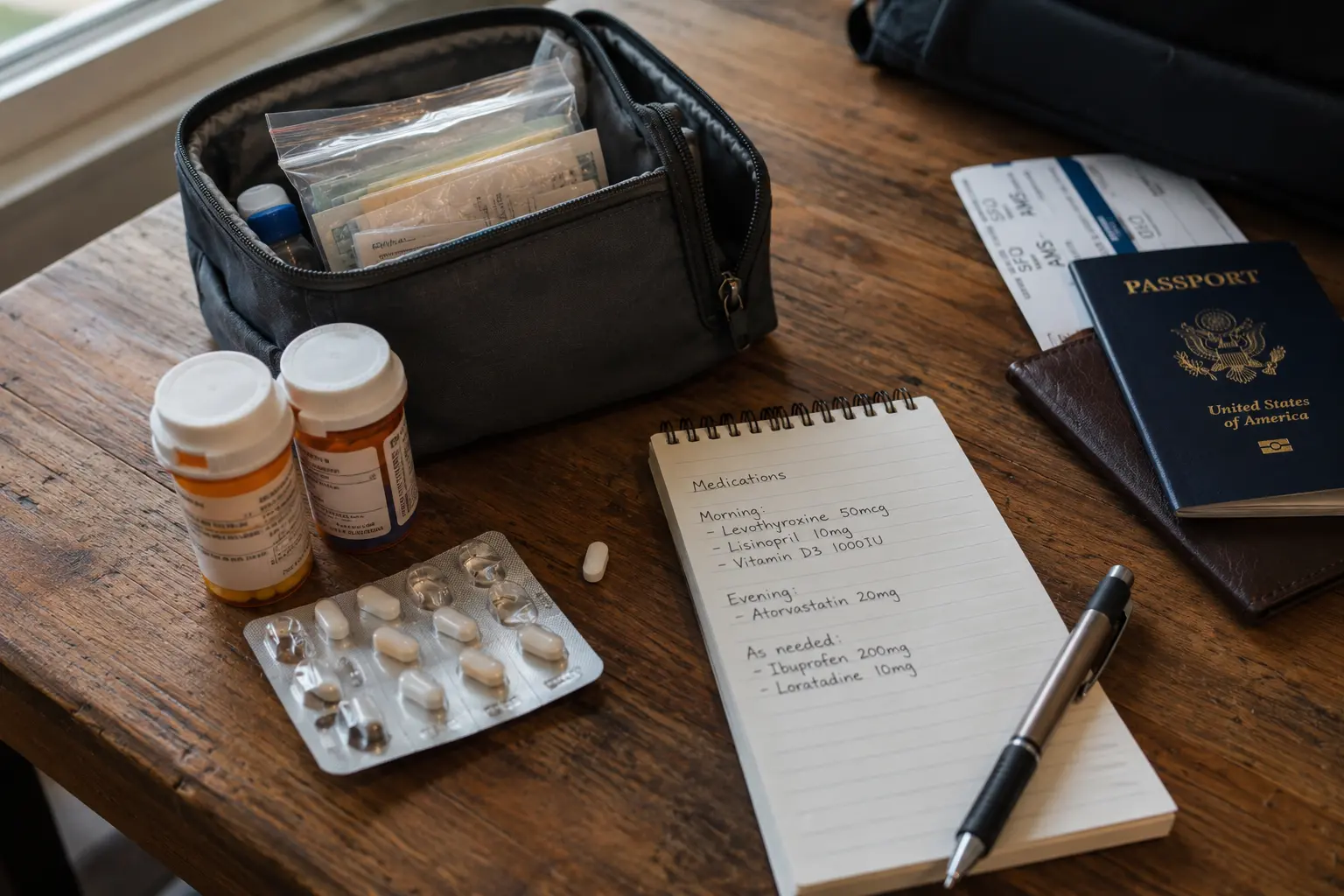
Standard advice: bring enough medication for the trip plus 3–7 extra days. Flights get delayed. Trips extend. Pharmacies in unfamiliar cities carry different brands. Bringing extra costs nothing. Running out can mean a costly emergency prescription or a curtailed trip.
3. Keep a Written Medication List
A printed card with medication names, doses, and timing — kept in a wallet or travel document holder — is essential for emergency medical situations, customs inspections, and pharmacy consultations in unfamiliar locations. Include generic drug names alongside brand names, as names differ internationally.
4. Use a Pill Organizer with an Alarm
Travel disrupts routines. A medication alarm that continues functioning regardless of routine is the most reliable way to maintain adherence away from home. Pack the pill organizer loaded for the entire trip duration — don’t rely on refilling from bottles each morning.
Recommended for Travel
Dustproof Waterproof Pill Organizer with 5 Alarm Reminders
Built specifically for travel and variable conditions — dustproof, moisture-resistant casing keeps medications protected in bags, humid climates, and unpredictable environments. 5 daily alarms continue working away from home.
Medical Devices: What to Pack and How to Protect Them
Hearing Aids
Pack the charging case, spare batteries (if applicable), and a cleaning kit. Hearing aid batteries are not always available internationally — bring at least double your expected usage. Keep the charging case in carry-on; hearing aids should never go in checked luggage.
CPAP / BiPAP Machines
TSA allows CPAP machines as carry-on items without counting toward your carry-on limit. Bring a universal power adapter for international travel. Distilled water for the humidifier is rarely available at airports — either pack a small sealed bottle or plan to purchase locally and use tap water briefly. A travel-sized CPAP case with a hard shell protects the machine in overhead bins.
Blood Pressure Monitors
Portable wrist or upper-arm monitors travel well. Pack the cuff, the monitor unit, and the charging cable in the same organized case. Readings during travel help detect medication-related issues early, especially when routines are disrupted.
Medical Alert Devices
GPS-enabled medical alert pendants require charging — a dead device provides no protection. Pack the charging cable in an easily accessible location, not buried in luggage. Check that the device has international cellular coverage if traveling abroad, or arrange for a travel-specific plan.
Glucose Monitors
Diabetic travelers should carry glucose meters, test strips, lancets, and insulin supplies (with doctor’s letter for customs) in carry-on. Extreme heat and cold in checked baggage can compromise insulin and test strip accuracy.
Keeping Everything Organized: The One-Case System
The most common packing mistake isn’t forgetting something — it’s packing it somewhere that makes it impossible to find.
A dedicated hard-shell electronics and accessories organizer keeps all cables, chargers, adapters, and small medical device accessories in one protected, immediately accessible case:
Recommended Product
Hard Shell Travel Electronics Organizer Bag
EVA hard shell protects against impact and splash. Customizable Velcro dividers, elastic loops for cables, and mesh pockets for small accessories. One case for every charger, adapter, power bank, and medical device cable — organized and instantly accessible.
- Impact-resistant EVA shell — survives checked baggage handling
- 2 removable padded dividers — custom layout for your specific devices
- Fits hearing aid cases, power banks, cables, adapters
Senior Travel Packing Checklist
Use this checklist before every trip:
Medications
- ☐ All prescription medications packed in carry-on (not checked luggage)
- ☐ 3–7 extra days of each medication beyond trip length
- ☐ Written medication list with doses, timing, and generic names
- ☐ Doctor’s letter for controlled substances or injectable medications
- ☐ Pill organizer loaded for entire trip duration, alarm set
- ☐ OTC backup medications: pain reliever, antacid, antihistamine, antidiarrheal
Medical Devices & Accessories
- ☐ Hearing aids + charging case or spare batteries (double quantity)
- ☐ Medical alert device charged + charging cable packed accessibly
- ☐ Blood pressure monitor + cable
- ☐ CPAP machine + power adapter + distilled water or plan for local purchase
- ☐ Glucose monitor + test strips + lancets + insulin (with cooling pack if needed)
- ☐ Universal power adapter for international travel
Electronics & Organization
- ☐ Phone charger + cable
- ☐ Power bank (fully charged) for emergency device charging
- ☐ Tablet/e-reader + charger
- ☐ All cables and chargers in a single hard-shell organizer case
- ☐ Earbuds or headphones
Emergency Information
- ☐ Insurance cards (original or photo on phone)
- ☐ Emergency contact card (printed, in wallet)
- ☐ Medication list (printed, in wallet)
- ☐ Primary care doctor’s contact information
- ☐ Travel insurance documentation
TSA Rules for Seniors: What You Need to Know
Medications: TSA allows all medications in carry-on bags. Pills and solid medications do not need to be declared. Liquids and gels above 3.4 oz must be declared at screening but are permitted for medical purposes with no volume limit.
Medical devices: CPAP machines, insulin pumps, and similar devices are allowed through security. You may be asked to remove them from the bag for separate screening. TSA Cares (1-855-787-2227) offers assistance for travelers with medical needs — contact them at least 72 hours before travel.
TSA PreCheck: For seniors who travel regularly, TSA PreCheck reduces screening time and stress significantly. Medical devices do not need to be removed in PreCheck lanes.
Recommended Product
Waterproof Medicine Storage Bag – Large Capacity Home & Travel First Aid Organizer
Keep all travel medications, first aid supplies, and health devices organized in one waterproof bag. Fits in a carry-on and doubles as a home medicine cabinet between trips.
- Large capacity — fits meds, bandages, thermometer, blood pressure cuff
- Waterproof exterior — protects contents from spills and humidity
- Multiple compartments with easy-grip zipper for arthritic hands
Recommended Product
Portable First Aid Kit Bag – Waterproof Home, Car & Outdoor Medical Organizer
Keep emergency medical supplies organized wherever you go. This compact waterproof bag fits in a tote, car glove box, or day pack — so you are always prepared at home, on the road, or outdoors.
- Multiple compartments for bandages, meds, and health tools
- Waterproof exterior — handles outdoor and travel conditions
- Compact enough for a glove box or carry-on bag
Recommended Product
Travel Medicine Bag with Compartments – Multi-Pocket First Aid Organizer Pouch
Keep every medication and first-aid item in its own dedicated spot — zippered pockets, elastic loops for tubes and pens, and mesh sections for flat items. TSA-friendly and compact enough for any carry-on or backpack.
- Multi-compartment system: no more digging through a single pouch
- Opens fully flat for complete visibility under stress
- Lightweight polyester — fits in backpacks, handbags, or glove compartments
Frequently Asked Questions
Can I bring all my medications on a plane?
Yes. TSA allows all medications — prescription and over-the-counter, in any quantity — in carry-on baggage. Liquid medications above 3.4 oz must be declared at the security checkpoint but are permitted without volume restriction for medical purposes. Keep medications in their original labeled containers when possible, especially for international travel.
What happens if I run out of medication while traveling?
In the US, most pharmacies can fill an emergency supply of a maintenance medication with a valid prescription. Internationally, the process varies by country. The safest solution is prevention: pack extra from the start. Keep your prescribing doctor’s contact information accessible in case an emergency prescription is needed remotely.
How do I manage medications across time zones?
For short trips (1–3 hours difference), maintain your home schedule. For longer differences, consult your doctor before travel — the correct approach varies by medication type. For most daily medications, shifting gradually (15–30 minutes per day) in the days before departure is recommended. A travel pill organizer with programmable alarms that can be reset to local time is essential for managing this adjustment.
Is travel insurance worth it for seniors?
Yes — especially for seniors with pre-existing conditions. Medical evacuation costs from a foreign country can exceed $100,000. Travel insurance that covers medical emergencies, trip cancellation, and medical evacuation costs a fraction of that risk. Look for policies that explicitly cover pre-existing conditions and do not exclude medications taken regularly.