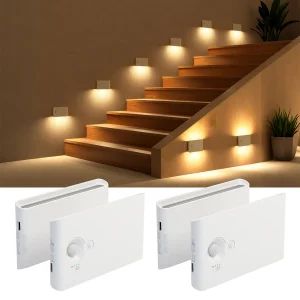
 LED Motion Sensor Night Light Dimmable Rechargeable Ambient Light with Magnetic Suction, for Cabinet/Living Room/Hallway/Stair
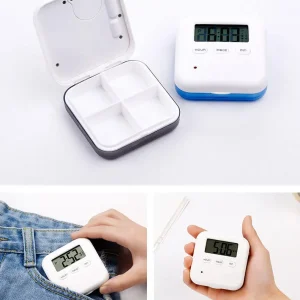 Smart Pill Organizer with 5 Alarms & Vibration Alert – 4 or 6 Compartments
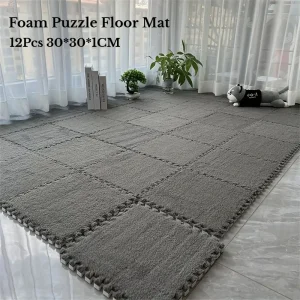 12Pcs Foam Puzzle Floor Mat Mat Interlocking Fluffy Playmat Plush Area Mat for Home Game Room Bedroom Decoration 30*30*1CM
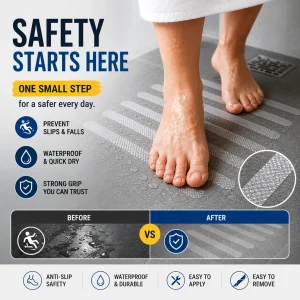 Anti-Slip Safety Strips for Shower, Bathtub & Stairs
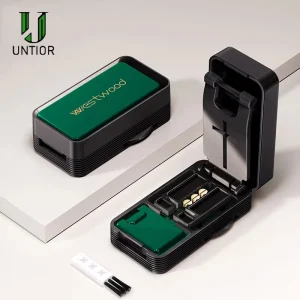 Pill Cutter with Sealed Storage – 2-in-1 Tablet Splitter and Pill Organizer
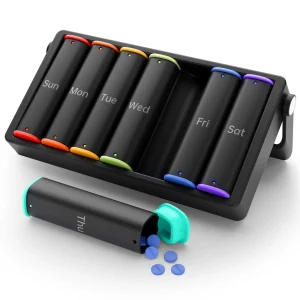 Large 7-Day Pill Organizer – Weekly Pill Box with Oversized Compartments
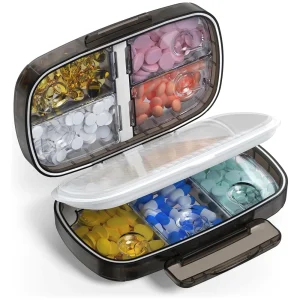 Waterproof Travel Pill Organizer – 8-Compartment Locking Pill Case for Seniors
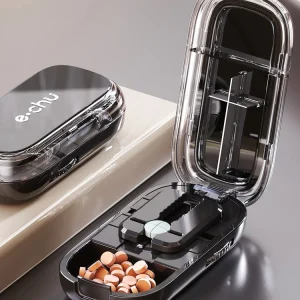 Adjustable Pill Cutter for Multiple Pills – Splits Up to 6 Tablets at Once
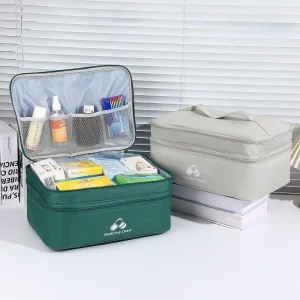 Double Layer Medicine Storage Bag – 3 Sizes, 4 Colors, Oxford Cloth
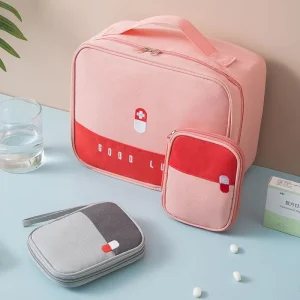 Portable First Aid Kit Bag – Waterproof Home, Car & Outdoor Medical Organizer
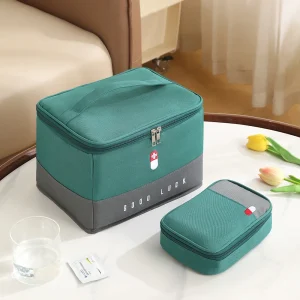 Waterproof Medicine Storage Bag – Large Capacity Home & Travel First Aid Organizer
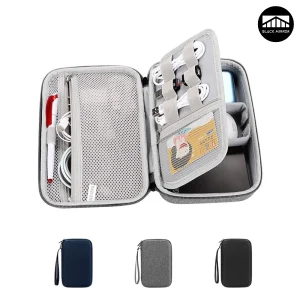 Hard Shell Travel Electronics Organizer Bag – Cables, Chargers & Medical Devices
Evidence-based content. Last updated: May 2026. Sources: CDC, NCOA, New England Journal of Medicine, AARP.
Every day in the United States, 125,000 people die from not taking their medications as prescribed. That number — from the New England Journal of Medicine — is larger than deaths from car accidents, falls, and firearms combined.
And the group most affected isn’t teenagers forgetting vitamins. It’s adults over 65 managing multiple chronic conditions, often with memory challenges, complex schedules, and no reliable system to help them stay on track.
If someone you love takes more than one medication daily, this guide is for them — and for you.
The Scale of Medication Non-Adherence in Older Adults
The statistics are sobering:
- 50% of seniors with chronic conditions don’t take their medications as prescribed (CDC, 2025)
- 125,000 deaths annually are attributed to medication non-adherence in the U.S.
- $300 billion per year in preventable medical costs linked to not following medication regimens
- Adults over 65 take an average of 4–5 prescription medications daily — coordination is genuinely difficult
- 1 in 3 hospital readmissions within 30 days is linked to medication issues (AARP Health, 2024)
These aren’t numbers about people being careless. They reflect a system that asks older adults to manage complex pharmaceutical schedules — often with no tools beyond a pill bottle and their own memory.
Why Seniors Miss Medications: The Real Reasons
Before solving the problem, it helps to understand it. Medication non-adherence in seniors breaks down into a few core causes:
1. Too Many Medications, Too Many Times
The average 70-year-old takes 5+ medications. Some are once daily. Some are twice. Some must be taken with food, some on an empty stomach, some at bedtime only. Managing this schedule without a system isn’t a memory failure — it’s a cognitive load problem that would challenge anyone.
2. No Reliable Reminder System
Most seniors rely on habit and mental reminders. But unlike younger adults, older adults often have disrupted routines — a doctor’s appointment, a visit from family, a bad night’s sleep — that break the habit loop and cause a missed dose with no backup to catch it.
3. Confusion About Whether a Dose Was Taken
This is one of the most common and dangerous issues: “Did I take my pill this morning or not?” Without compartmentalized storage, there’s no reliable way to answer that question. The result is either a missed dose or a double dose — both harmful.
4. Cognitive Decline
Early-stage dementia and mild cognitive impairment — which affect 1 in 5 adults over 70 — can make consistent medication management nearly impossible without external structure. The person may remember they take pills, but not whether they took them today.
5. Side Effects and Discouragement
Some seniors intentionally skip doses to avoid side effects, particularly with medications that cause nausea, dizziness, or constipation. This is worth discussing with a doctor — but an organized reminder system also helps by making it clearer which medication is which, and when.
The Consequences of Missing Medications
For chronic conditions, medication timing matters more than most people realize:
- Blood pressure medications — skipping even a few doses can trigger dangerous spikes that increase stroke risk significantly
- Blood thinners (anticoagulants) — missed doses increase clot risk; double doses increase bleeding risk
- Diabetes medications — inconsistent dosing causes blood sugar instability that damages organs over time
- Heart medications — skipping doses of beta-blockers or statins can destabilize cardiac rhythms
- Thyroid medications — need to be taken consistently at the same time daily to maintain proper hormone levels
The risk isn’t hypothetical. A single missed dose rarely causes a crisis. But inconsistent adherence over weeks and months is directly linked to disease progression, hospitalizations, and premature death.
Practical Strategies to Improve Medication Adherence
The good news: this is a solvable problem. These are the approaches with the strongest evidence base:
1. Use a Pill Organizer — The Right Kind
A basic pill organizer (the kind with days of the week) solves the “did I take it already?” problem. You can see at a glance whether the compartment is empty. For most seniors, this single change dramatically reduces missed and double doses.
For seniors who take medications at multiple times of day, a 4-compartment pill organizer organized by dose time (morning/noon/evening/bedtime) works better than a 7-day box. Load it fresh each morning, and the empty compartments tell the story.
2. Add an Alarm Reminder
Habit-based systems fail when routines are disrupted. An audible alarm doesn’t rely on habit — it activates regardless of what else is happening. Electronic pill organizers with built-in alarms combine storage and reminding in one device, eliminating both the confusion and the forgetting.
Recommended Product
4-Compartment Pill Organizer with Alarm Reminder
4 separate compartments, 4 independent alarms — set different reminder times for each dose. Simple button controls, no smartphone needed. The most practical single upgrade for seniors managing daily medications.
- 4 alarms — morning, noon, evening, bedtime
- Simple setup — no tech experience needed
- Compact — fits nightstand, purse, or travel bag
Upgrade Option — For Hard of Hearing or Complex Schedules
Smart Pill Organizer with 5 Alarms & Vibration Alert
Adds vibration to the audible alarm — ideal for seniors with hearing loss or heavy sleepers. 5 independent alarms (one more than standard), choice of 4 or 6 compartments, battery included.
- Vibration + audible — works even when sound is missed
- 5 alarms for complex medication schedules
- Battery included — ready out of the box
3. Tie Medication to an Existing Habit (Habit Stacking)
Place the pill organizer next to the coffee maker, the toothbrush, or the breakfast table — wherever the senior already has a consistent daily anchor. The visual cue paired with the existing habit reinforces the new behavior without relying on memory alone.
4. Weekly Pill Preparation Routine
Set aside 10 minutes every Sunday to load the week’s medications into the organizer. This becomes its own weekly habit, and it gives the caregiver or family member a built-in weekly check-in — both on medication supply and on how the week went.
Recommended for Weekly Prep
7-Day Weekly Pill Organizer with Alarm Timer – 28 Detachable Compartments
Fill it once on Sunday and the alarm handles the rest. 28 compartments across 7 detachable daily pods — snap off today's case for appointments or errands, leave the rest at the home organized.
- 7 days × 4 doses = 28 individual compartments
- Each day's pod detaches independently for travel
- Press-open lids — easy for arthritic hands
Special Case: Interval-Based Medications (Antibiotics, Pain Relief)
For medications prescribed as “take every X hours” — antibiotics, post-surgery pain medications, eye drops — a fixed-clock alarm is the wrong tool. The correct tool is a countdown timer that measures elapsed time from the last dose, not from a set clock time.
For Interval Medications
Mini Pill Organizer with Countdown Timer – Up to 99 Hours
Set the interval once — the alarm repeats automatically at the same spacing every time. Ideal for antibiotics (every 8h), pain meds (every 4–6h), or any prescription measured in hours rather than clock times. Ultra-compact at 9×5×2 cm, battery included.
- Countdown up to 99h 59min — not clock-based
- One press restarts the same interval after each alarm
- Pocket-sized — 9×5×2 cm, fits anywhere
5. Simplify Where Possible — Talk to the Doctor
Ask the prescribing physician whether any medications can be consolidated — once-daily formulations instead of twice-daily, combination pills, or long-acting versions. Reducing the number of daily doses directly reduces the burden of adherence.
6. Use a Caregiver App for Remote Oversight
For caregivers who don’t live with the senior, apps like Medisafe allow family members to see when medications are (and aren’t) taken. Paired with a physical pill organizer and alarm device, this creates a complete system with human backup.
Medication Safety Checklist for Caregivers
Use this checklist when setting up or reviewing a senior’s medication routine:
- ☐ Complete medication list is written down with doses and times
- ☐ All medications are stored in a cool, dry location (not the bathroom — humidity degrades many medications)
- ☐ Pill organizer is loaded weekly and checked daily
- ☐ Alarm reminders are set for each dose time
- ☐ Emergency contact has a copy of the medication list
- ☐ Refills are tracked — no running out unexpectedly
- ☐ Doctor and pharmacist are aware of all medications (including OTC and supplements)
- ☐ Side effects are documented and discussed at the next appointment
What About Automatic Pill Dispensers?
Automatic pill dispensers — devices that lock compartments and only release medication at programmed times — are available for more advanced needs. They’re typically used in memory care contexts where unsupervised access to medication could be dangerous.
For most independent seniors, an electronic pill organizer with alarm reminders provides the right balance of structure and autonomy. It prompts without restricting, and it’s simple enough that the senior can use it without help.
Recommended Product
Sealed Pill Storage Container – Large Capacity 400ml Stackable Organizer
Ideal for seniors taking multiple supplements. This airtight 400ml container keeps vitamins and medications fresh, sealed, and organized — stackable to save cabinet space.
- 400ml large capacity — fits fish oil, magnesium, and large gel caps
- Airtight sealed lid — protects from moisture and humidity
- Stackable design — organize multiple supplements in neat columns
Recommended Product
Foldable Medicine Organizer Bag – Lightweight Oxford Cloth, 6 Colors
A flat-folding Oxford cloth bag that expands into a fully organized medicine station. Assign different colors per family member to eliminate mix-ups — easy to grab, easy to carry.
- Folds flat when empty — minimal storage footprint
- Multiple pockets — keeps medications and first aid supplies separated
- 6 color options — one color per person, no label confusion
Recommended Product
AM/PM Weekly Pill Organizer with Alarm – 7-Day Twice-Daily Medication Timer
Built for seniors on twice-daily medication schedules. A 14-compartment (7 days × AM + PM) strip with a built-in LCD alarm that repeats up to 3 times if the dose is missed.
- Up to 4 daily alarm reminders at custom times
- Missed-dose repeat — rings 3 more times if ignored
- Detachable daily pods — carry just one day when out
Recommended Product
Double Layer Medicine Storage Bag – 3 Sizes, 4 Colors, Oxford Cloth
The best choice for caregivers managing medications for two people. Two fully independent storage levels keep each persons prescriptions separate and organized — no mixing, no confusion.
- Two separate storage levels — assign one per person or category
- Multiple grid pockets — classified storage for every medication type
- 3 sizes and 4 colors available for any home setup
Recommended Product
Large Family Medicine Bag – Oxford Household Medical Organizer
If you’re organizing medications for multiple people, this large-capacity Oxford bag keeps everything in one accessible place — prescriptions, devices, and first-aid essentials — with a crossbody strap for doctor visits.
- Holds full-size prescription bottles + medical devices
- Multiple compartments for organized, mix-up-free storage
- Crossbody strap for hands-free carry to appointments
Recommended Product
3-in-1 Pill Splitter – Cut Tablets Into Halves, Thirds or Quarters
When a doctor prescribes a fractional dose, you need a splitter that goes beyond halves. This precision cutter handles halves, thirds, and quarters with a food-grade blade and a built-in tray so no piece is lost.
- 3 cutting modes: halves, thirds, and quarters
- Food-grade blade — safe for direct medication contact
- Integrated storage tray keeps cut pieces secure
Recommended Product
Waterproof Travel Pill Organizer – 8-Compartment Locking Pill Case
For seniors who travel or spend time outdoors, this waterproof double-locking pill case keeps a week of medications protected against rain, drops, and accidental spills. Each of the 8 compartments latches individually — one opening never affects the rest.
- Waterproof & dustproof seal — safe for outdoor use
- Double lock: outer case + individual compartment latches
- Compact PP plastic — drop-resistant and easy to clean
Recommended Product
Large 7-Day Pill Organizer – Weekly Pill Box with Oversized Compartments
For seniors taking multiple prescriptions and supplements daily — oversized compartments that actually fit large gel caps and vitamins, with rainbow color-coded lids so the right day is always obvious at a glance.
- Oversized compartments — fits fish oil, calcium, multivitamins alongside prescriptions
- Rainbow lids — a different color per day for error-free identification
- Fill once a week — for home use and travel
Frequently Asked Questions
What is the most common cause of medication errors in seniors?
The most common cause is forgetting — either missing a dose entirely or being unable to remember whether a dose was already taken. This is addressed by compartmentalized pill organizers (visual confirmation that a dose was taken) combined with alarm reminders (audible prompt at the correct time).
How many medications is too many for a senior to manage alone?
There’s no hard number, but research consistently shows that adherence drops significantly above 3–4 daily medications. Any senior taking 5 or more medications daily should have a systematic management tool — at minimum a divided pill organizer, ideally with alarm reminders.
Is it safe to put all medications in one pill organizer?
For most oral medications, yes. Some medications require refrigeration (check the label), and some should not be exposed to light or humidity. As a rule, do not store medications in the bathroom — heat and steam degrade many formulations faster than people expect.
When should a caregiver take over medication management?
When a senior has had a medication error (taken wrong dose, wrong drug, or missed critical medications multiple times), when cognitive decline is affecting daily function, or when the senior requests help — these are all clear indicators. Starting with a pill organizer and alarm system is often enough to restore independence without requiring caregiver involvement at every dose.
What’s the difference between a pill organizer and a pill dispenser?
A pill organizer holds medications in labeled compartments — the senior opens the compartment and takes the pills. A pill dispenser locks compartments and mechanically dispenses the correct dose at programmed times, preventing access to other compartments. Dispensers are used when unsupervised medication access is a safety concern (e.g., advanced dementia). Organizers with alarms are appropriate for most independent seniors.